Signed in as:
filler@godaddy.com
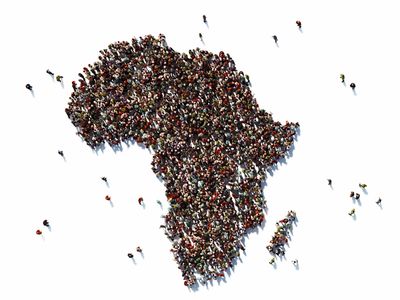
Below is the revised version as a living manual and working book—something that documents the idea while the Peace.Africa portal is being developed in real time.
PEACE.AFRICA
The Living Manual
A Practical Framework for Peace, Africa, Faith, Business, Government, and Human Connection
By William Worsley
Copyright © 2026 William Worsley
Incorporating earlier works and interviews associated with Dr. W. R. Worsley, including material dating from the 1980s, with continuing work from 2025–2026.
INTRODUCTION
This Book Is Alive
This is not a book about something that happened a hundred years ago.
This is a book about something happening right now.
Peace.Africa is alive.
The domain, the concept, the research, the journeys, the people, the organizations, the conversations, and the ideas behind this work are developing together. This book is therefore not intended to be a finished historical account placed on a shelf and forgotten.
It is a living manual.
As the work develops, the book can develop with it.
New people will be encountered.
New organizations will be documented.
New countries will be visited.
New businesses will be discovered.
New churches, mosques, schools, universities, governments, nonprofits, entrepreneurs, artists, historians, community leaders, and ordinary citizens will become part of the story.
The portal can grow alongside the book.
That is the unusual nature of Peace.Africa.
The book explains the why.
The portal provides a place for the doing.
PART ONE
THE TWO WORDS
Chapter 1 — PEACE
Before Peace.Africa became a domain, it was an idea.
Before it was an idea, it was a word.
And before it was a word used in English, the concept of peace had already traveled through thousands of years of human civilization.
The English word peace developed through Old French and ultimately from the Latin pax, associated with peace, agreement, reconciliation, and settlement.
But peace has never meant only the absence of war.
Peace can mean:
Agreement.
Security.
Reconciliation.
Order.
Justice.
Opportunity.
Cooperation.
Prosperity.
Human dignity.
That broader meaning is essential to understanding this manual.
A community can be free from war and still be deeply troubled.
A country can have political stability while its citizens lack opportunity.
A family can live under one roof while its members remain divided.
Peace therefore cannot simply mean that nobody is fighting.
Peace must also concern whether people have the ability to build.
Can they work?
Can they worship?
Can they learn?
Can they trade?
Can they travel?
Can they communicate?
Can they raise their families?
Can they disagree without destroying one another?
Can different institutions cooperate without surrendering their identity?
Those questions move peace from an abstract word into practical life.
That is where Peace.Africa begins.
Chapter 2 — AFRICA
Africa is not one story.
It is a continent of extraordinary diversity, containing thousands of communities, languages, cultures, histories, economies, political systems, religious traditions, and geographic environments.
Even the history of the word Africa is complicated.
The Romans used Africa for a region of North Africa, and over time the geographical meaning expanded until the name became associated with the continent as a whole.
The precise ancient origin of the name remains debated.
That uncertainty itself is instructive.
Names evolve.
Meanings evolve.
Maps evolve.
Nations evolve.
People evolve.
And Africa continues to evolve.
The Africa of today is not simply the Africa described in old books.
It is a continent of modern cities, entrepreneurs, universities, technology companies, farmers, engineers, artists, religious institutions, governments, investors, scientists, educators, families, young people, and emerging industries.
It is also a continent carrying enormous historical memory.
That history must be respected.
But history cannot be allowed to become a prison.
The purpose of this manual is therefore not to define Africa for Africans.
It is to listen, document, connect, and learn.
Chapter 3 — WHY PEACE AND AFRICA BELONG TOGETHER
Put the two words together:
PEACE.AFRICA
The result is bigger than either word by itself.
Peace provides the purpose.
Africa provides the place, people, history, and opportunity.
The combination creates a platform for asking practical questions:
Who is already building peace?
Who is creating jobs?
Who is educating children?
Who is preserving history?
Who is helping communities?
Who is developing technology?
Who is investing?
Who is solving problems?
Who is creating bridges between faiths?
Who is helping governments and citizens communicate?
These questions form the foundation of the Peace.Africa manual.
The answer does not have to be one organization.
It does not have to be one church.
It does not have to be one government.
It does not have to be one business.
It does not have to be one religion.
The answer can be many people working independently while benefiting from a common place to connect.
That is the opportunity.
PART TWO
THE LIVING PORTAL
Chapter 4 — The Website Beside the Book
A traditional book has a limitation:
Once printed, it does not change easily.
A digital portal has the opposite characteristic.
It can grow.
That is why Peace.Africa is being developed alongside this book.
The portal is intended to function as a free, flexible resource.
It can provide a place for:
The portal does not have to become everything.
It simply needs to become useful.
A useful tool does not need to replace another tool.
It can simply make the overall system better.
Chapter 5 — THE DOMAIN IS PART OF THE STORY
There is another unusual part of this story.
The Peace.Africa domain itself is currently part of the journey.
Fortunately, GoDaddy is working to update the domain-name status, and the redemption fee has already been paid.
There were technical quirks within the process.
Domain names operate through registries, registrars, status codes, redemption periods, renewals, and interconnected systems. Sometimes what appears simple to the person purchasing or renewing a domain can involve several systems communicating with one another.
That experience has become part of the story rather than a reason to abandon the project.
GoDaddy has been working through the issue.
The redemption fee has been paid.
The status is being addressed.
And the lesson is important:
Real projects encounter real problems.
A living project is not defined by never encountering a technical problem.
It is defined by how people respond when one occurs.
The willingness to work through the issue is itself part of the practical story of Peace.Africa.
The company has an opportunity to demonstrate its integrity through the process, and this experience has reinforced the importance of working constructively with the organizations and systems that make the modern Internet possible.
The domain is therefore not merely an address.
It has become part of the history of the project.
Chapter 6 — WE ARE NOT REPLACING ANYTHING
This principle should remain at the center of Peace.Africa:
WE ARE NOT REPLACING ANYTHING.
Peace.Africa is not intended to replace churches.
It is not intended to replace mosques.
It is not intended to replace governments.
It is not intended to replace businesses.
It is not intended to replace universities.
It is not intended to replace charities.
It is not intended to replace existing African media.
It is not intended to replace organizations already doing good work.
Instead, it can operate beside them.
Think of it as another road.
Another directory.
Another library.
Another communication channel.
Another meeting place.
Another tool.
If an organization already has an excellent website, Peace.Africa does not need to duplicate it.
It can help people discover it.
If a church already provides food assistance, Peace.Africa does not need to become the church.
It can document the program and direct people toward the existing institution.
If a government agency has a useful public service, Peace.Africa can help people find the information.
If a business is creating employment, Peace.Africa can tell its story.
This is the win-win principle.
PART THREE
THE FOUR COMMUNITIES
Chapter 7 — FAITH
Faith communities are among the oldest organized communities in human civilization.
Churches, mosques, synagogues, temples, and other religious institutions have historically provided education, charity, social support, moral instruction, community identity, and places where people gather.
Peace.Africa does not need to tell these communities what to believe.
It can provide a place to understand what they are doing.
The goal is documentation and connection.
Christian.
Muslim.
Jewish.
Traditional African religious communities.
Other faith traditions.
And people who simply want to understand their neighbors.
Peace begins with the ability to encounter another person without immediately requiring that person to become identical to you.
Chapter 8 — BUSINESS
Peace without economic opportunity is difficult to sustain.
Businesses create products.
Businesses provide services.
Businesses employ people.
Businesses move money through communities.
Businesses develop technology.
Businesses create infrastructure.
Businesses connect consumers with producers.
Africa’s economic future therefore belongs inside the Peace.Africa conversation.
A small business can matter just as much as a multinational corporation when it comes to understanding what is happening in a community.
Peace.Africa can become a place where businesses are documented not merely as companies, but as participants in community development.
Chapter 9 — GOVERNMENT
Governments have responsibilities that individuals and businesses cannot easily fulfill.
They establish laws.
They provide public services.
They manage infrastructure.
They maintain records.
They regulate industries.
They provide public safety.
They represent communities internationally.
Peace.Africa should therefore approach government as another important part of the ecosystem.
The portal does not have to become a government.
It can help people find governments.
That distinction matters.
Information is most useful when people can locate the institution responsible for acting upon it.
Chapter 10 — THE PEOPLE
Ultimately, however, Peace.Africa is about people.
Not domains.
Not technology.
Not corporations.
Not governments.
Not institutions.
People.
The farmer.
The teacher.
The student.
The pastor.
The imam.
The entrepreneur.
The engineer.
The doctor.
The artist.
The historian.
The government worker.
The mother.
The father.
The child.
The traveler.
The immigrant.
The African living in Africa.
The African living elsewhere.
The person whose family left Africa generations ago.
Everyone has a story.
A living portal can provide places for those stories to be discovered and connected.
PART FOUR
THE JOURNEY
Chapter 11 — AFRICA EXPERIENCED
This manual will eventually become a travel record.
Not simply:
I went to Africa.
But:
What did I see?
Who did I meet?
What did I learn?
What surprised me?
What did the historical record say?
What did people living there say?
What did the businesses reveal?
What did the faith communities reveal?
What did government institutions reveal?
What opportunities became visible?
Travel changes when a person stops looking only at destinations and starts looking at systems.
A city becomes more than buildings.
A church becomes more than a building.
A business becomes more than a storefront.
A government office becomes more than an address.
A person becomes more than a photograph.
Everything becomes part of a larger story.
Chapter 12 — DOCUMENTING THE LIVING AFRICA
The future chapters of this book will document people and organizations encountered through travel and research.
Some stories may be large.
Some may be extremely small.
Some may involve major institutions.
Others may involve one person doing something extraordinary with very limited resources.
The standard will not be fame.
The standard will be value.
Does this person contribute something?
Does this organization provide something useful?
Does this story teach something?
Does this business create opportunity?
Does this institution preserve history?
Does this project bring people together?
Does this information help someone?
If the answer is yes, it may belong in the Peace.Africa record.
PART FIVE
THE ARCHIVE
Chapter 13 — FROM THE 1980s TO 2026
This project does not begin with the Internet.
Earlier work matters.
The foundation includes earlier material associated with Dr. W. R. Worsley, including interviews from the 1980s.
Those earlier materials represent one period of observation.
The work undertaken in 2025 and 2026 represents another.
Connecting those periods creates something valuable:
a longitudinal record.
What did people believe decades ago?
What has changed?
What remained the same?
What predictions proved correct?
What assumptions proved wrong?
What opportunities were invisible then but obvious now?
Technology makes it possible to place these periods into conversation with one another.
The result is not simply an archive of the past.
It becomes a way to understand the present.
PART SIX
THE PEACE.AFRICA METHOD
Chapter 14 — OBSERVE
First:
Observe.
Do not begin by assuming that you already know the answer.
Travel.
Listen.
Read.
Interview.
Research.
Visit.
Ask questions.
Look carefully.
Chapter 15 — DOCUMENT
Second:
Document.
Record what can responsibly be recorded.
Preserve interviews.
Preserve photographs.
Preserve historical documents.
Preserve addresses and organizational information where appropriate.
Preserve stories.
Preserve context.
A society cannot learn from information that has disappeared.
Chapter 16 — CONNECT
Third:
Connect.
If two organizations are doing complementary work, help people discover the connection.
If a business provides something a community needs, make the relationship visible.
If researchers have information that educators can use, create a bridge.
If faith communities can cooperate on humanitarian work, document the opportunity.
Connection is one of the simplest forms of infrastructure.
Chapter 17 — BUILD
Fourth:
Build.
Do not stop with observation.
Build something useful.
A database.
A story.
A directory.
A documentary.
A business relationship.
An educational resource.
A community project.
A technology platform.
A partnership.
The purpose of Peace.Africa is ultimately to move from information to usefulness.
PART SEVEN
THE OPEN INVITATION
Chapter 18 — EVERYBODY CAN PARTICIPATE
Peace.Africa should not belong intellectually to one person.
William Worsley may have initiated and documented this particular effort, but the usefulness of the platform will ultimately depend upon participation.
The strongest portals are not merely places where one person speaks.
They become places where many people can contribute knowledge.
Therefore, the invitation is simple:
If you have something valuable, bring it.
If you have history, document it.
If you have knowledge, share it.
If you have a business, explain what it does.
If you have a community program, make it discoverable.
If you have traveled, tell what you learned.
If you have research, preserve it.
If you have an idea, develop it.
If you have a solution, demonstrate it.
If you have a story, tell it.
Chapter 19 — WHY THIS CAN BE A WIN-WIN
The most powerful idea behind Peace.Africa may be its simplicity.
Nobody has to lose for another person to gain.
A church can gain visibility.
A business can gain customers.
A government can reach citizens.
A university can reach researchers.
A nonprofit can find supporters.
A traveler can find information.
A student can find educational material.
A historian can find documentation.
A community can find resources.
And Peace.Africa can become more useful because these relationships exist.
That is the model:
Connect rather than replace.
Document rather than erase.
Build rather than destroy.
Share rather than hide.
Cooperate where cooperation is possible.
Chapter 20 — THE BOOK WILL CHANGE
Because this is a living manual, this chapter is not necessarily the end.
The story is still developing.
The domain situation is still developing.
The portal is still developing.
The research is still developing.
The travels are still developing.
The relationships are still developing.
The archive is still developing.
The possibilities are still developing.
Future editions can therefore contain information that does not yet exist today.
That is not a weakness.
It is the point.
A living book should have room for tomorrow.
CONCLUSION
Peace Is Something We Build
Peace is not merely something we hope for.
It is something we build.
We build it through relationships.
We build it through information.
We build it through education.
We build it through economic opportunity.
We build it through honest history.
We build it through communication.
We build it through cooperation.
We build it when people who are different discover that they can still accomplish something together.
That is the premise of Peace.Africa.
The portal is free.
The concept is open.
The book is living.
The journey continues.
And the invitation is extended to everyone willing to contribute something useful.
We are not replacing what already exists.
We are building beside it.
We are connecting it.
We are documenting it.
We are making it easier to discover.
And if the work succeeds, the greatest achievement will not be that someone built another website.
It will be that people who otherwise might never have found one another discovered that they could work together.
That is the possibility contained in two simple words:
PEACE.AFRICA
Amen.
AUTHOR’S NOTE
This living manual is part of an ongoing body of work by William Worsley, incorporating earlier works and interviews associated with Dr. W. R. Worsley, including material originating in the 1980s, together with continuing research, travel, documentation, and development during 2025 and 2026.
Copyright © 2026 William Worsley. All rights reserved.
Peace.Africa is intended as a complementary public resource. Its purpose is to support discovery, education, documentation, communication, and constructive cooperation among people and institutions. It is not intended to replace existing organizations, institutions, governments, faith communities, businesses, or other resources.
The work continues.